


Peas are widely processed for food production, agricultural distribution and seed applications. Before storage, packaging or further processing, harvested peas often need to be cleaned and graded to remove unwanted materials and improve product consistency.
For commercial processors, selecting a suitable pea cleaning processing plant involves more than choosing a single cleaning machine. The equipment combination, processing capacity, factory layout and final product requirements all influence the overall solution.
Hebei Julite Sorting Technology Co., Ltd. provides grain and seed cleaning equipment for different agricultural materials. Its published Canadian pea cleaning project offers a practical reference for buyers planning a large-capacity pea processing facility.
The project uses a combination of a 5XFZ-40S Air Screen Cleaner and a 5XFJ-30C Vibration Grader, with a reported processing capacity of approximately 20 tons per hour and a purity of 99.9%.
When evaluating a pea processing equipment supplier, buyers often want to understand how the equipment is configured for an actual production environment.
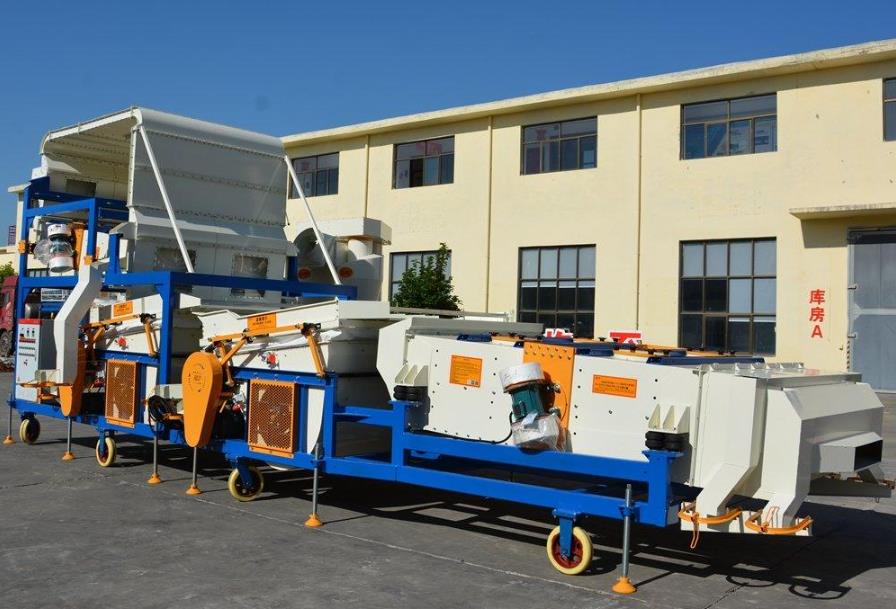
Julite's Canadian project demonstrates how two types of cleaning and grading equipment can be combined into one processing system.
Project information:
| Item | Project Details |
|---|---|
| Application | Pea cleaning |
| Project country | Canada |
| Processing capacity | Approximately 20 t/h |
| Reported purity | 99.9% |
| Main equipment | 5XFZ-40S Air Screen Cleaner |
| Grading equipment | 5XFJ-30C Vibration Grader |
| Layout | Designed according to the customer's warehouse dimensions |
The project combines an air screen cleaning machine with a vibration grader. The equipment arrangement was specially designed according to the overall dimensions of the customer's warehouse.
This is an important consideration for commercial processing facilities. Even when two plants require similar hourly capacity, their available installation space and material handling arrangements may be different.
The equipment layout should therefore be evaluated together with the processing requirements.
Explore the 20 T/H Pea Cleaning Processing Plant Project in Canada.
A commercial pea cleaning line can combine different machines according to the raw material condition and required cleaning result.
In Julite's Canadian project, two main machines form the equipment combination.
The air screen cleaner is the main cleaning equipment in the Canadian pea processing project.
Air screen cleaning equipment generally uses airflow and screening to separate materials according to their physical characteristics, including particle size and aerodynamic behavior.
For pea processing, the equipment configuration should be considered in relation to:
Incoming pea condition
Dust and lightweight impurities
Oversized and undersized materials
Required processing capacity
Desired cleaning result
The appropriate screen configuration and operating settings should be confirmed according to the actual pea variety and raw material sample.
The second machine in the project is the 5XFJ-30C Vibration Grader.
A vibration grader separates materials according to particle size through screening. Different screen openings can be selected according to the grading requirements.
For commercial pea processing, size grading may be required when buyers need to classify the finished material into different size ranges.
The grading requirements should be clarified before production so that the screen configuration can match the intended output.
The two machines perform different functions within the processing system.
The air screen cleaner handles cleaning and separation, while the vibration grader focuses on size classification.
Combining the machines allows the processing system to address more than one requirement without relying on a single machine to perform every operation.
The final equipment arrangement should also consider feeding, discharging, conveying and access for maintenance.
Selecting the right pea cleaning machine starts with understanding the raw material and the required production result.
A machine with a high rated capacity may not be the best choice if its cleaning configuration does not match the incoming material.
Different pea varieties and processing purposes may require different equipment settings.
Before requesting a quotation, clarify whether the material is intended for:
Commercial food processing
Agricultural distribution
Seed processing
Further grading and packaging
The intended application helps determine the required cleaning and grading standards.
The impurity content of raw peas can vary according to harvesting, transportation and storage conditions.
Common materials that may need to be separated include:
Dust and lightweight impurities
Leaves and plant residues
Stones
Soil particles
Oversized foreign materials
Small particles and broken peas
Providing photographs or a raw material sample helps the manufacturer evaluate the cleaning requirements more accurately.
Processing capacity is one of the most important factors when choosing a pea cleaning plant.
Different projects may require different production levels:
| Processing Scale | Typical Requirement |
|---|---|
| Small processing facility | Lower hourly throughput |
| Medium processing facility | Regular commercial cleaning |
| Large processing plant | Continuous, higher-capacity processing |
For a large project such as Julite's Canadian case, the reported capacity is approximately 20 t/h.
However, actual capacity depends on material characteristics, impurity content, machine configuration and operating conditions. Buyers should confirm the expected output for their own raw material before ordering.
Not every pea cleaning project needs the same grading standard.
Some processors mainly need to remove foreign materials, while others require additional size classification.
If the finished peas must be separated into different size ranges, a vibration grader may be included in the equipment configuration.
Buyers should provide the required grading ranges or relevant product standards when discussing the project.
One important detail in Julite's Canadian project is that the equipment layout was designed according to the customer's warehouse dimensions.
For a large-capacity pea cleaning processing plant, available factory space can influence the arrangement of the equipment and the material transfer process.
Before finalizing a processing line, buyers should consider the following factors.
The length, width and height of the warehouse should be measured before equipment arrangement.
This helps determine where the main machines, feeding points and discharge areas can be positioned.
The equipment combination should allow materials to move through the required processing stages.
The connection between the air screen cleaner and vibration grader should be considered during layout planning.
Operators need enough space to inspect equipment, adjust settings and perform routine maintenance.
A layout that only considers machine dimensions may create difficulties during daily operation.
If the processing plant may expand in the future, buyers should discuss possible additional equipment and space requirements before confirming the layout.
A well-planned equipment arrangement can help avoid unnecessary changes during installation.
Although the Canadian project provides a 20 T/H reference, not every pea processor needs the same production configuration.
The required equipment depends on the material condition and final product requirements.
Food processing facilities may focus on removing foreign materials and achieving consistent product quality before further processing or packaging.
The cleaning and grading requirements should be determined according to the buyer's product standards.
For agricultural distribution, cleaning and size classification may help prepare peas for subsequent handling and commercial supply.
The appropriate grading configuration depends on the required product size ranges.
Seed processing projects may have additional requirements related to seed size and material quality.
Depending on the incoming material and final specifications, buyers may need to consider additional separation equipment.
The equipment configuration should be based on the actual seed processing target rather than applying one standard cleaning line to every project.
Hebei Julite Sorting Technology Co., Ltd. was established in 2006 and specializes in grain cleaning and seed processing equipment.
The company's product range includes:
Air-screen cleaners
Air-screen cleaners with gravity tables
Gravity separators
De-stoners
Magnetic separators
Vibration graders
Polishing machines
Elevators
Grain and seed processing lines
Julite provides equipment for different agricultural materials, including beans, sesame, wheat, peanuts, corn, maize and sunflower seeds.
For pea processing projects, buyers can discuss their required capacity, impurity types, grading standards and factory dimensions with the technical team.
The Canadian 20 T/H case also provides a practical reference for customers who need a large-capacity equipment combination and a layout adapted to their warehouse.
Visit the Julite Grain and Seed Cleaning Equipment Product Center to explore the available equipment categories.
When contacting a pea cleaning plant manufacturer, providing complete project information helps the supplier recommend a more suitable equipment configuration.
Prepare the following details before sending an inquiry:
| Information | What to Provide |
|---|---|
| Raw material | Pea variety and material condition |
| Processing capacity | Required tons per hour |
| Impurity types | Dust, leaves, stones, soil and other foreign materials |
| Cleaning target | Required cleaning result and purity |
| Grading requirements | Required pea size ranges, if applicable |
| Factory dimensions | Warehouse length, width and height |
| Project location | Country and installation site |
| Power supply | Local voltage and frequency requirements |
If possible, provide photographs or a sample of the raw peas.
This allows the manufacturer to better understand the material and evaluate which cleaning and grading equipment may be appropriate.
A pea cleaning plant may use air screen cleaners, vibration graders, gravity separators and other equipment depending on the raw material and processing requirements.
Julite's Canadian 20 T/H project uses a 5XFZ-40S Air Screen Cleaner and a 5XFJ-30C Vibration Grader.
The published Canadian project has a reported processing capacity of approximately 20 tons per hour, with a reported purity of 99.9%.
Actual performance for another project should be confirmed according to the raw material and operating conditions.
Yes. Equipment arrangement can be planned according to the available installation space and processing requirements.
Julite's Canadian project is an example of a layout designed around the customer's warehouse dimensions.
A vibration grader uses screening to separate materials according to particle size. It can be used when the processing project requires more consistent size classification.
Start with the required hourly throughput, then evaluate the incoming material condition, impurity content, cleaning target and grading requirements.
Providing these details helps the manufacturer recommend a more appropriate equipment combination.
Julite supplies grain and seed cleaning equipment that can be combined into processing systems according to project requirements. The final equipment list and layout should be confirmed with the technical team.
Planning a commercial pea processing facility requires careful consideration of cleaning capacity, grading requirements and equipment layout.
Julite's Canadian project demonstrates a 20 T/H pea cleaning solution combining a 5XFZ-40S Air Screen Cleaner with a 5XFJ-30C Vibration Grader. The layout was designed according to the customer's warehouse dimensions, providing a useful reference for large-capacity processing projects.
If you are looking for a pea cleaning processing plant manufacturer in China, contact Hebei Julite Sorting Technology Co., Ltd. with your raw material details and production requirements.
To help the team prepare a suitable proposal, include:
Pea variety and raw material photographs
Required processing capacity
Main impurities to be removed
Desired cleaning and grading results
Warehouse dimensions
Project country
Send your processing requirements to Julite and discuss a pea cleaning line designed around your production needs.
Processing demand survey
x