


Sorghum processing requires more than removing dust and foreign materials. Depending on the final product requirements, processors may also need to remove the outer shell, separate large and small impurities, and improve the consistency of the finished grain.
A suitable sorghum dehulling and cleaning processing line combines several machines to handle different processing stages. Instead of relying on one machine for all cleaning tasks, the production line uses equipment with specific functions to improve the overall processing workflow.
Hebei Julite Sorting Technology Co., Ltd. provides grain cleaning and seed processing equipment for different agricultural materials. Its sorghum processing solution combines a shelling machine, cleaning machine and vibration grader.
This article explains the main equipment configuration, processing workflow, selection factors and a real project reference to help grain processors evaluate a suitable solution.
A complete sorghum processing line can be configured according to the incoming grain condition, processing capacity and final product requirements.
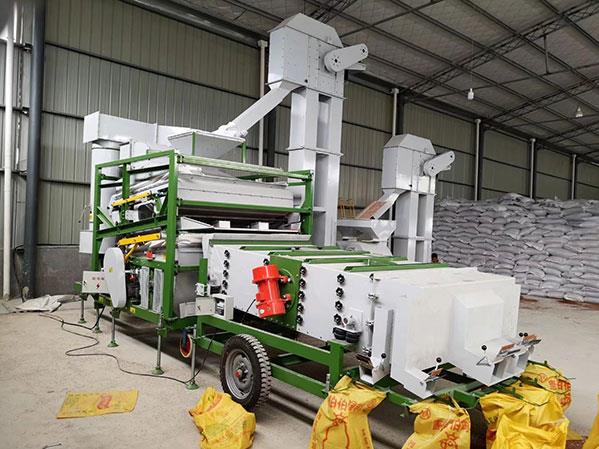
For a basic dehulling and cleaning process, the main stages include:
The first stage uses a shelling machine to remove the outer shell of the sorghum.
Dehulling is an important step when the processing target requires sorghum kernels with the outer covering removed. The machine configuration should be selected according to the grain variety, moisture condition and required processing result.
Before purchasing a sorghum dehulling machine, processors should clarify whether they need basic shell removal or a more complete processing system with additional cleaning and grading stages.
After dehulling, the material may contain dust, chaff and other lightweight impurities.
A grain cleaning machine can use airflow and screening to separate these materials from the usable grain. The cleaning method and equipment capacity should match the material characteristics and expected production volume.
For projects requiring more complete cleaning, an air-screen cleaner can be considered as part of the processing configuration.
The next stage uses a vibration grader to separate materials according to particle size.
Different screen openings allow the machine to separate oversized and undersized impurities from the target product. This step helps improve the consistency of the finished material.
The screen configuration should be selected based on the actual sorghum kernel dimensions and grading requirements.
After dehulling, cleaning and grading, the processed sorghum can be collected for the next stage of handling, storage or further processing.
For larger projects, conveyors, storage equipment and packing machines can be considered to connect the processing stages and reduce manual handling.
Choosing a sorghum cleaning and dehulling machine is easier when buyers can review an actual processing configuration rather than relying only on general equipment descriptions.
Julite presents a sorghum dehulling and cleaning processing line in its project case section.
The published project information includes the following configuration:
| Item | Project Information |
|---|---|
| Processing material | Sorghum |
| Main equipment | Shelling machine, cleaning machine, vibration grader |
| Processing capacity | 7–8 t/h |
| Reported purity | 99% |
| Main functions | Dehulling, dust and light impurity removal, size grading |
The shelling machine removes the sorghum shell, the cleaning machine handles dust and light impurities, and the vibration grader separates large and small impurities.
The case reports a processing capacity of 7–8 tons per hour and a purity of 99%. These figures belong to the published project configuration and should not be treated as guaranteed results for every sorghum variety or processing condition.
For a similar project, the actual equipment selection and expected output should be confirmed through raw material testing and technical communication.
The required equipment depends on whether the project focuses on basic cleaning, dehulling, grading or a more complete grain processing workflow.
The following machines may be considered according to the processing requirements.
The dehulling machine handles the removal of the outer shell. Buyers should confirm the required dehulling result, raw material condition and expected capacity before selecting the model.
An air-screen cleaner separates dust, chaff and other impurities through airflow and screening. It can be used as a cleaning stage in grain processing systems.
For projects that require both air separation and additional cleaning functions, Julite also offers the 5XFZ-25SC Air-screen Cleaner with Gravity Table.
This model combines an ultra-low-speed elevator, vertical air screen, cyclone dust removal system, gravity table and vibrating grading screen. Its published specifications include a capacity of 10–15 t/h and a rated purity of 99%. The suitability of this model for a specific sorghum project should be confirmed with the technical team.
A vibration grader separates grain according to size using different screen openings. It is useful when the finished product needs more consistent particle sizing.
The required screen configuration depends on the sorghum variety and the target grading standards.
For a continuous processing workflow, conveyors and elevators can be added to move material between machines.
The number and arrangement of auxiliary machines should be determined by the plant layout, equipment height, material flow and available installation space.
A suitable sorghum cleaning machine should match the actual processing conditions rather than simply having the highest advertised capacity.
Before choosing equipment, consider the following factors.
The incoming sorghum may contain different types and quantities of impurities.
For example:
Dust and chaff
Large foreign materials
Small particles
Broken or undersized grain
Outer shells requiring removal
Providing a raw material sample or clear photographs can help the manufacturer understand the cleaning requirements.
Capacity is one of the most important factors when selecting a sorghum processing line.
Buyers should distinguish between hourly processing capacity for raw material and the final output after cleaning and grading. The actual result can vary depending on the material condition, machine configuration and operating settings.
Typical questions to clarify include:
How many tons of sorghum need to be processed per hour?
Will the machine operate continuously or in batches?
Is there room for future capacity expansion?
What is the required working schedule?
Different applications may require different processing results.
For example, a project focused on dehulling may have different equipment requirements from one that also needs detailed size grading or high-purity cleaning.
The final product requirements should be confirmed before determining the complete machine combination.
The dimensions and arrangement of the production line should fit the available factory space.
When requesting a quotation, buyers can provide:
Factory length, width and height
Existing equipment arrangement
Raw material feeding position
Finished product discharge position
Available electrical supply
This information helps the supplier evaluate the equipment layout and material transfer requirements.
When comparing a sorghum processing equipment supplier, buyers should look beyond the price of an individual machine.
A suitable supplier should be able to discuss the complete processing workflow and explain why each machine is included.
Important questions include:
Can the equipment handle the sorghum variety and condition used in my factory?
What machines are needed for dehulling, cleaning and grading?
What is the expected processing capacity of the complete line?
What are the power requirements and overall equipment dimensions?
Can the equipment layout be adjusted according to factory space?
What spare parts and technical support are available?
Can the supplier provide a suitable project configuration based on a raw material sample?
Providing detailed information at the beginning of the inquiry can reduce unnecessary equipment selection and help the supplier prepare a more relevant proposal.
Hebei Julite Sorting Technology Co., Ltd. was established in 2006 and specializes in grain cleaning and seed processing equipment.
The company integrates research and development, production, sales and service. Its product range includes air-screen cleaners, gravity separators, de-stoners, magnetic separators, vibration graders, elevators and grain processing lines.
For sorghum processing projects, Julite can discuss equipment combinations based on:
Raw sorghum characteristics
Dehulling requirements
Dust and impurity types
Required hourly capacity
Finished product grading standards
Factory layout and installation conditions
Rather than selecting equipment only by model name, buyers can communicate their actual processing requirements to determine a suitable machine combination.
If you are planning to build or upgrade a sorghum processing plant, the first step is to identify the required dehulling, cleaning and grading functions.
Julite provides grain cleaning and seed processing equipment for different agricultural materials. Its published sorghum project provides a reference configuration with a reported capacity of 7–8 t/h.
To receive a more suitable equipment recommendation, prepare the following information before contacting the supplier:
Raw material: Sorghum variety and current condition
Capacity: Required tons per hour
Processing target: Dehulling, cleaning, grading or combined processing
Impurities: Dust, chaff, large materials, small particles or other impurities
Factory information: Available installation space and power supply
Destination: Country where the equipment will be installed
Visit the Sorghum Dehulling and Cleaning Processing Line case to review the project reference, or contact Julite to discuss your processing requirements.
Send your raw material details and target capacity to Julite to get a processing line recommendation for your sorghum project.
Processing demand survey
x