


Seed quality is an important consideration for agricultural seed producers, seed processing plants, and grain handling businesses. Raw seeds collected after harvesting may contain dust, plant residues, undersized particles, broken seeds, and other impurities. Even when the raw material comes from the same crop, differences in seed size and physical condition can affect the consistency of the final product.
A seed screening machine helps separate seeds and impurities according to particle size, while other seed sorting equipment can separate materials based on properties such as density or color. When these machines are combined into a properly designed seed processing line, processors can manage multiple cleaning and grading stages within one production system.
Hebei Julite Sorting Technology Co., Ltd. manufactures grain cleaning and seed processing equipment, including air-screen cleaners, vibration graders, gravity separators, destoners, and complete processing lines. The appropriate configuration depends on the crop, incoming material condition, required output, and final product specifications.
A seed screening machine is used to separate seeds and unwanted particles by size through one or more screens with different opening dimensions. As material moves across the screen surface, particles are separated according to whether they pass through or remain on the screen.
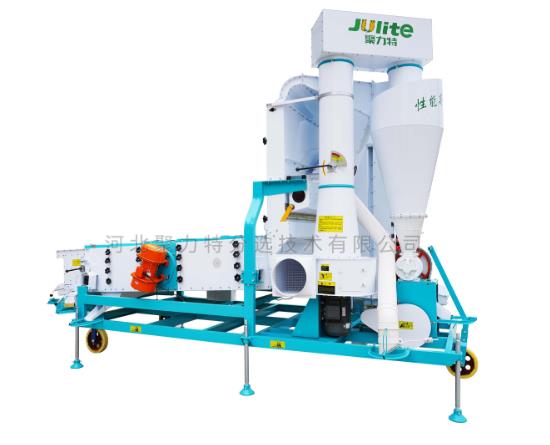
Screening is commonly used in the initial cleaning and grading stages of seed processing. It can help remove oversized contaminants, undersized particles, and seeds outside the required size range.
However, screening alone cannot remove every type of impurity. Lightweight chaff, stones with dimensions similar to seeds, and discolored seeds may require additional separation methods.
A typical screening process involves three main steps:
Material feeding: Raw seeds enter the machine through a controlled feeding system to create a relatively uniform material layer.
Screen separation: Vibration or another mechanical movement distributes the seeds across the screen surface. Different screen openings separate particles into different fractions.
Discharge and collection: Separated materials leave through designated outlets for collection, further processing, or rejection.
Screen opening size, vibration settings, feeding rate, and seed characteristics all influence separation performance. These parameters should be selected according to the material being processed rather than using the same setup for every crop.
Different machines perform different functions in a seed processing plant. Understanding these differences helps buyers select equipment that addresses their actual production requirements.
An air-screen cleaner combines screening with airflow separation. Screens separate particles by size, while the air system helps remove lighter impurities such as dust, chaff, and other lightweight materials.
This type of machine is commonly considered for preliminary cleaning and fine cleaning applications involving wheat, beans, sesame, corn, and other agricultural seeds.
For processors handling material with a mixture of coarse debris and lightweight contaminants, an air-screen cleaner can provide multiple cleaning functions within one machine.
A seed grading machine separates seeds into different size fractions using suitable screens. It is useful when processors need more consistent seed dimensions for packaging, commercial grading, or subsequent production stages.
For example, a seed processor may need to divide a batch into large, medium, and small fractions before further handling. The actual number of grades depends on the product specification and the machine configuration.
Julite's product range includes the 5XFJ Series Vibration Grader and the 5XFJ-10C Vibration Grader.
Some impurities and defective seeds have a similar size to good seeds, making screen separation insufficient. A gravity separator uses differences in physical properties, particularly density, to separate materials under controlled airflow and deck movement.
This equipment can be considered when a processor needs to separate relatively heavy, well-developed seeds from lighter or less-developed material. Its effectiveness depends on the physical differences within the feed material.
A destoner is used to remove stones and other heavy contaminants from agricultural products. This function is particularly important when incoming material contains soil particles, small stones, or dense foreign matter.
A destoner can be installed after preliminary screening when the raw material and the desired cleaning result require an additional heavy-impurity separation stage.
A complete seed processing line connects several machines into a coordinated system. Instead of selecting equipment individually without considering the overall workflow, buyers should determine the processing objectives first and then configure the necessary stages.
Raw seeds enter the production line through a feeding system. Preliminary cleaning removes larger debris, plant residues, and some lightweight impurities before the material reaches more precise equipment.
This stage helps reduce the impurity load on downstream machines and prepares the material for subsequent separation.
The material passes through a seed cleaning machine or air-screen cleaner to remove additional impurities and separate particles by size.
Screen specifications should match the crop and target product. Incorrect screen selection can allow unwanted particles to remain in the product or remove usable seeds along with the rejects.
Depending on the product requirements, the line may include a vibration grader, gravity separator, or other sorting equipment.
A vibration grader is suitable when size classification is required. A gravity separator may be appropriate when density differences are important. Additional sorting equipment should only be included when it addresses a specific quality requirement.
For seed intended for agricultural planting, a seed coating machine may be included if treatment is part of the customer's production process.
This stage is not necessary for every seed processing line. The equipment configuration should reflect the intended end use and the applicable handling requirements.
After cleaning and grading, suitable conveying equipment transfers the processed material to storage, further treatment, or packaging machinery.
A coordinated material flow helps reduce unnecessary manual handling and supports continuous operation. The packaging system should be selected according to the product, package type, and required output.
A standalone screening machine and a complete processing line serve different purchasing needs.
| Comparison | Standalone Seed Screening Machine | Complete Seed Processing Line |
|---|---|---|
| Main purpose | Screening and size separation | Multiple cleaning and processing stages |
| Equipment scope | One machine or screening unit | Several connected machines |
| Installation | Can be integrated into an existing plant | Requires overall layout and workflow planning |
| Best suited for | Targeted screening or grading needs | New plants or broader production upgrades |
| Selection priorities | Screen size, capacity, separation requirements | Crop type, process stages, total capacity, layout, and automation needs |
For a facility that already has cleaning equipment, adding a seed screening machine may be sufficient to address a specific grading problem. A new facility or a plant with several unresolved processing requirements may benefit more from a complete seed processing line.
The right choice depends on the existing equipment, investment budget, production goals, and required final product quality.
Different crops have different physical characteristics, so a suitable screening and sorting configuration should be selected for each application.
Wheat and other cereal seeds may require the removal of straw fragments, dust, undersized particles, and other foreign materials. An air-screen cleaner can serve as an important part of the cleaning process, with additional grading or separation equipment selected according to the required output.
Corn processing may involve screening, impurity removal, size classification, and additional separation stages. Buyers should consider kernel dimensions, incoming impurity levels, and the desired capacity when selecting the screen and downstream equipment.
Beans and pulses vary in shape, size, and density. A combination of screening and other separation methods may be needed when the objective is to remove impurities and produce more uniform material.
The appropriate setup depends on the specific bean variety and the degree of separation required.
Small seeds require careful consideration of screen openings and feeding conditions. A screen that is too large may allow unwanted particles to pass through, while an unsuitable opening may reduce throughput or cause usable seeds to be discharged with waste.
Testing the actual material can help determine the appropriate screening configuration.
Sunflower seed processing may involve preliminary cleaning, size grading, destoning, and other stages depending on whether the final product is intended for food, oil production, or further processing.
A screening machine is one component of the overall system. It should be selected according to the required cleaning result and integrated with other equipment where necessary.
Before requesting a quotation, buyers should prepare basic information about their material and production requirements.
Determine the target throughput in tons per hour. The selected machine should match the required production rate and the capacity of connected equipment.
For a complete production line, the capacity of each stage must be considered to avoid creating a bottleneck.
Provide the crop name, approximate seed dimensions, moisture condition if relevant, and information about the impurities present in the raw material.
Different materials may require different screens, airflow settings, and separation methods.
Specify whether the main objective is to remove oversized debris, separate undersized particles, classify seeds by size, or prepare the material for further processing.
A clear target helps determine whether a screening machine alone is adequate or additional equipment is necessary.
For plant upgrades, share the specifications and arrangement of the existing machinery. For a new project, provide the available installation space, material flow requirements, and expected production capacity.
These details help the supplier evaluate equipment compatibility and propose a practical process arrangement.
Ask about screen replacement, cleaning access, routine maintenance, spare parts, and operator requirements. These factors can influence long-term operating efficiency and the suitability of the machine for a particular facility.
Purchasing from a manufacturer that supplies multiple types of seed processing equipment can make it easier to evaluate individual machines alongside the complete production workflow.
Hebei Julite Sorting Technology Co., Ltd. specializes in grain cleaning and seed processing equipment. Its product range includes air-screen cleaners, vibration graders, gravity separators, destoners, magnetic separators, elevators, seed coating machines, packing machines, and processing lines.
For B2B buyers, the main consideration is not simply the number of machines included in a quotation. The proposed configuration should match the crop, processing objective, required throughput, installation conditions, and final product requirements.
Before confirming an order, buyers should request the relevant technical specifications, confirm the expected capacity for their material, and clarify the scope of supply for each processing stage.
Explore Julite's grain and seed cleaning equipment to review available machine categories and processing solutions.
A seed screening machine primarily separates materials by size using screens. A seed sorting machine is a broader term that may include screening, gravity separation, optical sorting, or other methods depending on the equipment design.
Some machines can handle different crops by changing screens or adjusting operating parameters. However, suitability depends on seed dimensions, shape, material characteristics, and the required output. Confirm the intended crops with the manufacturer before purchasing.
A typical line may include a feeder, pre-cleaner, air-screen cleaner, grading machine, gravity separator, conveying equipment, and packaging machinery. Not every line requires all these components; the configuration should match the crop and processing objective.
Start with the seed type, target capacity, required size fractions, and the acceptable level of material loss. Screen specifications and machine performance should then be evaluated against those requirements.
A production line can often be configured according to crop type, capacity, required processing stages, and installation layout. Buyers should provide these details so the manufacturer can assess the appropriate equipment combination.
A suitable seed screening machine helps agricultural processors separate seeds by size and remove unwanted particles. When screening is combined with air cleaning, grading, gravity separation, and other necessary operations, it can become part of a more complete seed processing line.
For seed processing plants, agricultural businesses, and equipment distributors, the best solution depends on the crop, raw material condition, required capacity, and final product specifications.
Hebei Julite Sorting Technology Co., Ltd. offers a range of grain and seed processing equipment for different applications. Contact the team to discuss your material, production target, and equipment requirements.
Contact Julite
Email: export@julite.com
Phone: +86-311-85155319 / +86-311-85155320
WhatsApp: +86 159 3015 0766
Website: https://www.julite.com/
Hot Tags: seed screening machine, seed screening equipment, seed sorting machine, seed grading machine, seed cleaning machine, seed processing line, commercial seed cleaning equipment, seed processing line manufacturer, seed screening machine supplier
Processing demand survey
x