


Green mung beans are widely traded for food processing, wholesale distribution and agricultural markets. Before packaging or further processing, raw mung beans need to be cleaned to remove dust, stones, damaged beans and other foreign materials.
For commercial processors, a complete green mung bean cleaning processing line should do more than basic impurity removal. Depending on the final product requirements, the system may also need to separate beans by density and size, improve surface appearance and prepare the finished product for packaging.
Hebei Julite Sorting Technology Co., Ltd. provides grain and seed cleaning equipment for different agricultural materials. Its green mung bean processing project in Uzbekistan combines several stages, including pre-cleaning, de-stoning, gravity separation, vibration grading, polishing and packing.
This article explains the equipment configuration, processing workflow and important selection factors for buyers planning a commercial mung bean processing plant.
A real processing project provides a useful reference for buyers who need to understand how different machines work together.
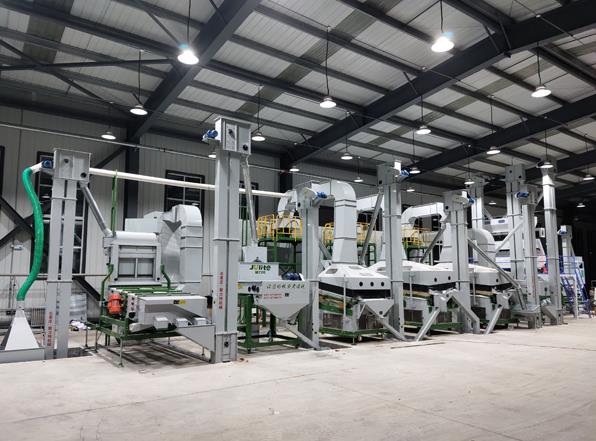
Julite designed a green mung bean cleaning processing line for a customer in Uzbekistan. The project was installed in 2016, and Julite's engineer was present during the installation.
The published equipment configuration includes:
| Processing Stage | Main Equipment | Function |
|---|---|---|
| Pre-cleaning | Pre-cleaner | Removes dust and light impurities |
| De-stoning | De-stoner | Removes stones |
| Density separation | Gravity separator | Separates insect-damaged and blighted beans |
| Size grading | Vibration grader | Separates beans by size |
| Surface treatment | Polishing machine | Polishes the bean surface |
| Packaging | Packing machine | Packs mung beans by set weight |
One important feature of this configuration is that it includes a polishing stage after cleaning and grading.
For buyers who need to prepare green mung beans for commercial distribution, this combination provides a reference for integrating impurity removal, bean classification, surface treatment and packaging into one workflow.
The project page does not publish a specific hourly capacity or finished-product purity, so these figures should be confirmed separately for new projects.
View the Green Mung Bean Cleaning Processing Line Project in Uzbekistan.
A commercial mung bean processing line uses different machines to handle different material characteristics.
The complete process should be designed according to the incoming bean condition and the required finished product.
The first stage uses a pre-cleaner to remove dust and lightweight foreign materials from incoming green mung beans.
Raw beans may contain:
Dust and fine particles
Dry leaves
Light plant residues
Chaff
Other lightweight impurities
An air-screen cleaning system combines airflow and screening to separate different materials.
Julite's 5XFS Series Air-Screen Cleaner is designed to remove light impurities through a vertical air screen and separate larger and smaller particles through vibration screening.
For example, the 5XFS-7.5C model is listed with a four-layer sieve configuration and a rated capacity of 7.5 t/h. Actual suitability for a particular mung bean project should be confirmed according to the raw material and processing requirements.
After initial cleaning, the material can pass through a de-stoner.
Stones and other dense foreign materials may enter agricultural products during harvesting, transportation and handling.
A mung bean de-stoner separates stones according to differences in specific gravity and material movement on the separation surface.
The main selection factors include:
Stone content in the incoming material
Required processing capacity
Bean size and physical characteristics
Expected separation result
Connection with other cleaning machines
Removing heavy impurities before subsequent processing also helps reduce the risk of unwanted materials entering downstream equipment.
A gravity separator uses differences in specific gravity to separate materials that may have similar particle sizes but different density characteristics.
In Julite's Uzbekistan project, the gravity separator is used to separate insect-damaged and blighted beans.
This stage is particularly relevant when the incoming mung beans contain a mixture of sound and defective material.
The separation result depends on raw material condition, moisture, feeding rate and operating settings. Buyers should provide a sample or photographs to help the manufacturer evaluate the required configuration.
A vibration grader separates green mung beans according to particle size.
Different screen openings allow the machine to classify beans into different size groups.
This stage is useful for processors who need more uniform product sizing before polishing, storage or packaging.
The required grading ranges should be confirmed according to the buyer's market specifications and final product requirements.
Polishing is an important stage in Julite's Uzbekistan processing line.
A mung bean polishing machine is used to improve the surface appearance of processed beans.
For commercial processors, polishing requirements should be discussed together with bean condition, product appearance and acceptable breakage levels.
The goal is not simply to increase the surface shine. The machine settings and processing conditions should also be considered to avoid unnecessary damage to the beans.
Before selecting polishing equipment, buyers should clarify:
Whether surface polishing is required
Expected finished appearance
Incoming bean condition
Required processing capacity
Acceptable broken-bean level
The actual polishing result should be evaluated through material testing.
The final stage of the Uzbekistan project uses a packing machine to pack green mung beans according to a preset weight.
Packaging requirements depend on the buyer's distribution channel and product format.
For example, commercial processors may need bulk bags for wholesale supply, while other projects may require smaller packages for retail distribution.
The packing machine should be selected according to the required bag weight, packaging material and production speed.
The required equipment depends on the raw material condition and the final product requirements.
The following equipment categories may be considered when planning a green mung bean processing plant.
An air-screen cleaner handles dust and lightweight impurities while separating materials according to particle size.
It can serve as an initial cleaning stage before de-stoning and gravity separation.
A de-stoner removes stones and other dense impurities from the material flow.
It is useful when raw mung beans contain heavy foreign materials that cannot be adequately removed through ordinary screening.
A gravity separator handles materials with different density characteristics.
It can be used to separate lighter or defective beans from heavier material when the physical characteristics allow effective separation.
A vibration grader classifies mung beans according to size.
Different sieve openings can be selected according to the required product grading ranges.
A polishing machine is included when the buyer requires surface treatment to improve the appearance of the processed beans.
The polishing configuration should be selected according to the incoming material and desired finish.
A packing machine prepares the finished product for storage, transportation or commercial distribution.
Bag weight and packaging format should be confirmed before choosing the packing equipment.
Choosing the right mung bean cleaning machine requires understanding the raw material and the final product requirements.
A machine that works well for one bean variety or impurity condition may need different settings for another.
Before selecting equipment, determine what impurities are present.
Common examples include:
Dust and light plant residues
Stones and soil particles
Insect-damaged beans
Blighted or defective beans
Broken beans
Different-sized beans
Providing a raw material sample can help the manufacturer evaluate the separation requirements.
Capacity determines the equipment model and the overall production line configuration.
Buyers should specify:
Required tons per hour
Daily operating hours
Expected annual processing volume
Whether the line operates continuously
Whether future expansion is planned
The capacity of the complete line should be coordinated across all processing stages.
For example, if the polishing machine cannot handle the output of the grading machine, it may become a production bottleneck.
Not every mung bean processing project requires polishing.
Some buyers mainly need impurity removal and size grading. Others may require additional surface treatment to meet their product appearance standards.
The decision should be based on the final product specification and market requirements.
If the finished mung beans need to be classified into different size groups, provide the required size ranges to the manufacturer.
This information helps determine the screen openings and grading configuration.
Packaging requirements affect the final machine selection.
Before requesting a quotation, clarify:
Bag weight
Packaging material
Bulk or retail packaging
Required packing speed
Manual or automatic bag handling
When planning a processing facility, buyers often need to decide whether to purchase individual machines or a complete processing line.
| Comparison | Single Machine | Complete Processing Line |
|---|---|---|
| Main purpose | Performs one or a few cleaning functions | Connects multiple processing stages |
| Equipment selection | Focuses on a specific task | Based on the complete workflow |
| Material handling | May require manual transfer or existing conveyors | Can be planned as a connected system |
| Installation | Integrated into an existing plant | Requires overall layout planning |
| Suitable projects | Equipment replacement or small-scale upgrades | New plants or comprehensive processing upgrades |
A single machine may be sufficient when a factory already has other processing equipment.
However, a complete green mung bean cleaning line may be more suitable when the buyer needs to establish a new processing workflow from raw material feeding to final packaging.
The right choice depends on the existing factory conditions and investment plan.
Hebei Julite Sorting Technology Co., Ltd. specializes in grain and seed cleaning equipment and processing line solutions.
Its product range includes:
Air-screen cleaners
De-stoners
Gravity separators
Magnetic separators
Vibration graders
Polishing machines
Elevators
Packing machines
Complete grain and seed processing lines
For green mung bean projects, Julite can discuss equipment combinations according to the raw material, processing capacity, impurity types and final product requirements.
The Uzbekistan project provides a practical example of a processing line that combines cleaning, de-stoning, density separation, grading, polishing and packing.
For overseas buyers, the key is to communicate the actual processing requirements rather than selecting equipment only by its name or rated capacity.
When contacting a mung bean processing line manufacturer, providing complete project information helps the supplier prepare a more relevant equipment proposal.
| Information | Details to Provide |
|---|---|
| Raw material | Green mung bean variety and condition |
| Processing capacity | Required tons per hour |
| Main impurities | Dust, stones, damaged beans and other foreign materials |
| Grading requirements | Required bean size ranges |
| Polishing requirements | Whether surface polishing is needed |
| Packaging | Bag weight and packaging format |
| Factory dimensions | Available length, width and height |
| Project location | Country and installation site |
| Power supply | Local voltage and frequency |
If possible, provide photographs or a sample of the raw mung beans.
You can also share the expected finished product appearance and any grading requirements from your buyers.
This information helps the manufacturer evaluate whether the project needs a basic cleaning system or a more complete line with polishing and packing equipment.
A complete line may include a pre-cleaner, de-stoner, gravity separator, vibration grader, polishing machine and packing machine. The actual equipment combination depends on the raw material and final product requirements.
A gravity separator separates materials according to differences in specific gravity. In mung bean processing, it can help separate insect-damaged, blighted or other lower-density beans when the material characteristics allow effective separation.
A polishing machine is used to improve the surface appearance of processed beans. Its operating settings should be selected according to the required finish and acceptable bean breakage level.
Yes. A vibration grader uses different screen openings to classify mung beans into different size groups.
No. Polishing is an optional processing stage depending on the buyer's finished product requirements. Some projects may only need cleaning and grading.
Julite has published a green mung bean processing project in Uzbekistan that includes pre-cleaning, de-stoning, gravity separation, vibration grading, polishing and packing equipment. New project configurations should be confirmed according to the actual processing requirements.
Start with the required hourly throughput and evaluate the incoming material, impurity content and final product requirements. The capacity of each machine should be coordinated to avoid bottlenecks in the complete processing system.
A commercial green mung bean processing plant needs equipment that matches the incoming material and finished product requirements.
Julite's Uzbekistan project demonstrates a complete equipment combination covering pre-cleaning, de-stoning, gravity separation, size grading, polishing and packing.
If you are looking for a green mung bean cleaning processing line manufacturer in China, contact Hebei Julite Sorting Technology Co., Ltd. with your project information.
To receive a more suitable equipment recommendation, prepare:
Green mung bean variety and raw material photographs
Required processing capacity
Main impurity types
Desired size grading ranges
Whether polishing is required
Packaging weight and format
Factory dimensions
Project country
Send your raw material details and processing requirements to Julite to discuss a suitable green mung bean cleaning and processing solution.
Processing demand survey
x