


Sunflower seeds are processed for different purposes, including food production, kernel recovery, and further agricultural processing. For processors planning to expand production, a sunflower seed shelling processing line can help organize the steps required to handle raw seeds and separate kernels from their shells.
Selecting a suitable processing line requires more than choosing a shelling machine. Buyers need to consider raw seed quality, shelling performance, kernel damage, separation efficiency, required output, and the equipment needed before and after shelling.
For agricultural processors, food manufacturers, equipment distributors, and project buyers, understanding these factors can make equipment selection more practical and help avoid mismatches between individual machines and the overall production target.
A sunflower seed processing line is a combination of machines designed to handle sunflower seeds through selected processing stages. Depending on the intended final product, a line may include cleaning, feeding, shelling, kernel separation, grading, and subsequent handling or packaging equipment.
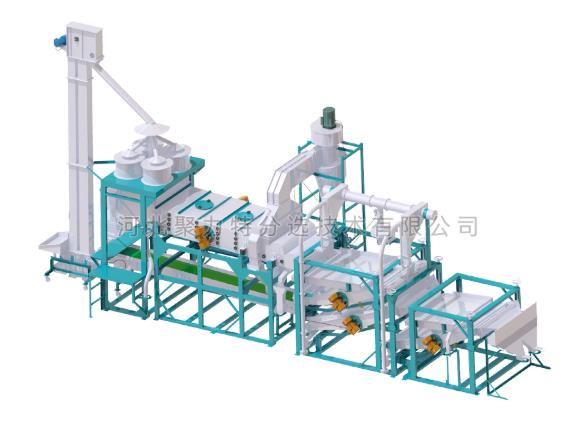
The exact configuration depends on whether the buyer intends to produce whole kernels, mixed kernel fractions, or another processed product.
A shelling line should be designed around the raw material and the required finished product rather than using the same configuration for every application.
Before requesting a quotation, buyers should clarify the following:
Type and condition of incoming sunflower seeds
Required processing capacity
Intended final product
Acceptable kernel damage level
Desired shell and kernel separation result
Available installation space
Requirements for downstream handling and packaging
These details help the manufacturer determine which stages and equipment are appropriate for the project.
Incoming sunflower seeds may contain dust, plant residues, oversized debris, undersized material, or other foreign impurities.
If the raw material is not properly prepared, impurities may interfere with downstream equipment or affect the consistency of processing.
A sunflower seed cleaning machine can be used as part of the preparation stage, depending on the impurities present and the cleaning objective.
The required cleaning method should be selected according to the actual raw material. Air-screen cleaning, destoning, and other separation methods perform different functions and are not interchangeable.
Seed size, moisture condition, variety, and incoming material quality can influence shelling behavior.
If raw material varies significantly, the shelling stage may require adjustments to maintain a suitable balance between shell removal and kernel protection.
A consistent feeding arrangement and a clearly defined operating procedure can help make the production process easier to monitor.
Buyers should ask how the proposed equipment handles variations in seed characteristics and whether sample testing is available before finalizing the configuration.
Shelling and separation are related but distinct operations.
The shelling stage is intended to open the seed shell, while subsequent separation equipment distinguishes kernels from shells and other material according to the relevant physical characteristics.
The required separation configuration depends on the shelling result, the characteristics of the seed variety, and the quality requirements of the finished kernels.
For processors selling kernels as a finished product, kernel recovery and the amount of residual shell material are important evaluation criteria.
After shelling and separation, the recovered kernels may require additional grading, sorting, storage, or packaging.
The appropriate downstream equipment depends on the intended market and product specification. For example, processors supplying different kernel grades may need additional classification, while other operations may focus on preparing the product for bulk storage or packaging.
Planning the entire process flow helps buyers avoid capacity mismatches between shelling, separation, and subsequent operations.
A typical processing concept can be organized into several stages. The exact sequence should be confirmed according to the selected equipment and the intended output.
Incoming seeds are inspected to understand their condition and identify the main impurities.
Suitable cleaning equipment may then remove selected dust, lightweight impurities, oversized debris, or other contaminants before shelling.
The specific equipment required depends on the incoming seed quality and the processing objective.
The prepared seeds are delivered to the shelling equipment at a suitable feed rate.
Stable feeding helps maintain more consistent operating conditions. Excessive or uneven feeding can affect processing performance, so buyers should confirm the machine's recommended operating range.
The shelling machine applies a mechanical action designed to open the seed shells.
The operating settings should balance shell opening with kernel protection. Excessive mechanical action may increase kernel breakage, while insufficient action may leave more seeds unshelled.
The best operating conditions depend on the seed variety, size distribution, moisture condition, and equipment design.
After shelling, the material may contain kernels, shell fragments, and seeds that have not been fully opened.
Separation equipment is used to distinguish these fractions. Depending on the process design, additional screening, airflow-based separation, or repeated processing may be considered.
The final configuration should be evaluated through representative material testing whenever possible.
The recovered kernels can be directed to subsequent grading, sorting, storage, or packaging operations if required.
The product specification should define the acceptable proportion of shell fragments, broken kernels, and other foreign materials.
This makes it easier to evaluate whether the complete line meets the buyer's production requirements.
Choosing a sunflower seed sheller manufacturer involves evaluating the complete processing objective, not simply comparing machine prices.
Capacity is one of the first factors buyers should clarify.
Specify the required throughput in tons per hour and explain the expected operating schedule. The quotation should identify whether the stated capacity refers to raw seed input, shelling output, or another defined measurement.
This distinction matters because input capacity and finished kernel output are not necessarily equivalent.
The capacity of each machine should also be checked against the other stages in the line to avoid creating a bottleneck.
For many processors, the objective is not only to open the shells but also to recover kernels in a suitable condition.
Buyers should discuss the expected proportion of unshelled seeds, broken kernels, and residual shell material. If these factors are commercially important, request a sample test using the actual raw material.
The acceptance criteria should be agreed upon before the equipment is purchased rather than assumed from general marketing descriptions.
A shelling machine and a kernel separation system should be evaluated together.
Ask the supplier how the proposed line separates kernels from shell fragments and what additional equipment may be needed to achieve the required product quality.
The answer should reflect the actual seed variety and intended output, because separation results can vary with material characteristics and operating conditions.
Processing equipment requires routine inspection and maintenance.
Before ordering, confirm access to wear components, replacement parts, cleaning points, and the recommended maintenance schedule.
Buyers should also ask what operating documentation, installation guidance, and technical support are available.
For processors planning continuous production, maintenance access and spare-part availability are important considerations when evaluating the long-term suitability of a line.
A complete processing line needs sufficient space for the machines, feeding arrangements, material transfer, operator access, and maintenance.
Provide the supplier with the available installation area and, where possible, a layout drawing.
The proposed arrangement should also account for dust management, safe access, material collection, and the movement of finished products to storage or packaging.
Buyers may choose between an individual shelling machine and a more comprehensive processing system.
| Consideration | Standalone shelling machine | Complete processing line |
|---|---|---|
| Main purpose | Shelling within an existing process | Coordinated processing across several stages |
| Existing equipment | Relies on compatible upstream and downstream machines | Can be planned around the required process flow |
| Installation planning | Focuses on one machine and its connections | Requires layout and material-flow coordination |
| Capacity planning | Must match the existing line | Capacity needs to be balanced across stages |
| Best suited to | Facilities adding or replacing one processing stage | New projects or broader process upgrades |
Neither option is universally better.
A processor with suitable cleaning and separation equipment already installed may only need a standalone sheller. A new facility or a plant upgrading several stages may benefit from evaluating a complete line.
The decision should be based on the existing production setup, required output, and investment plan.
Agricultural processors may need to handle variable raw seed conditions and seasonal supply. Their equipment selection should account for incoming material characteristics, operating schedules, and maintenance requirements.
A well-defined process flow can help identify which cleaning and separation stages are necessary before shelling.
Businesses producing sunflower kernels for further food processing may place greater emphasis on kernel condition, foreign-material control, and consistent product specifications.
The required equipment should be evaluated against the buyer's intended application and relevant quality requirements.
Any food-contact or product-safety claims should be supported by documentation for the actual equipment and components supplied.
Distributors and project contractors often need clear technical specifications to compare models and prepare quotations for customers.
Useful information includes the processing capacity, installation dimensions, power requirements, equipment scope, spare parts, and expected output.
For projects involving several machines, a process-flow diagram can help buyers confirm how the equipment will work together.
A detailed inquiry allows the manufacturer to evaluate the project more accurately.
Before requesting a quotation, prepare the following information:
Raw material: Sunflower seed variety and incoming condition
Processing capacity: Required tons per hour
Final product: Whole kernels, mixed kernels, or another output
Shelling requirements: Expected shell removal and kernel condition
Separation requirements: Desired separation of kernels and shell fragments
Installation conditions: Available space and power supply
Automation requirements: Manual, semi-automatic, or automated handling preferences
Commercial details: Destination country, delivery expectations, and scope of supply
If representative samples are available, ask whether the supplier can conduct a material test or recommend a suitable configuration based on the sample.
The final quotation should clearly define the machines included, their specifications, the expected process flow, and any items that need to be supplied separately.
Hebei Julite Sorting Technology Co., Ltd. supplies grain and seed cleaning equipment and related processing solutions. Its published product range includes air-screen cleaners, gravity separators, destoners, magnetic separators, grading machines, elevators, and processing lines.
For sunflower seed projects, buyers should discuss the intended product, required throughput, incoming seed condition, and the processing stages needed before and after shelling.
This information helps determine whether the project requires an individual machine, selected supporting equipment, or a coordinated processing line.
Explore Julite's grain and seed processing equipment to review its equipment categories. You can also view the sunflower seed shelling processing line within the product range and contact the company to confirm the available configuration and technical details.
It is a combination of equipment designed to process sunflower seeds through selected stages such as cleaning, shelling, kernel separation, grading, and subsequent handling. The actual configuration depends on the intended output.
A sheller performs the shell-opening operation. A processing line may include additional machines to prepare raw seeds, separate kernels from shells, and handle the finished product.
Start with the required raw-material input per hour, then confirm the capacity of each stage. Also consider the expected kernel output, seed characteristics, and any downstream equipment that could limit production.
The shelling configuration and operating settings influence kernel damage. Buyers should test the proposed equipment with representative seeds and agree on measurable acceptance criteria before purchasing.
No. Facilities that already have suitable cleaning and separation equipment may only need a shelling machine or a specific additional stage. New facilities may need a more comprehensive solution.
Provide the seed variety, required capacity, intended finished product, shelling and separation requirements, available installation space, power supply, and destination market. A sample or process-flow drawing can also help clarify the requirements.
A suitable sunflower seed shelling processing line should be designed around the raw material, required throughput, kernel quality, and intended finished product.
For buyers comparing equipment, the key considerations include pre-cleaning, shelling performance, kernel and shell separation, capacity matching, maintenance, and installation planning. Evaluating these stages together helps identify a configuration that fits the actual production process.
Julite offers grain and seed processing equipment that can be reviewed for individual project requirements. By defining the production target and sharing detailed raw-material information, buyers can request a more relevant equipment proposal.
Contact Julite
Email: export@julite.com
Phone: +86-311-85155319 / +86-311-85155320
WhatsApp: +86 15930150766
Website: https://www.julite.com/
Hot Tags: sunflower seed shelling processing line, sunflower seed shelling machine, sunflower seed processing equipment, sunflower seed sheller manufacturer, sunflower seed processing line manufacturer, sunflower kernel separation machine, sunflower seed cleaning machine, sunflower seed shelling plant, sunflower seed processing machinery, sunflower seed equipment supplier
Processing demand survey
x