


Peanuts arrive at processing facilities with more than just the crop itself. Depending on harvesting and handling conditions, raw peanuts may contain soil, stones, stems, leaves, shells, dust, broken material and other foreign particles. Before peanuts enter further processing, these materials need to be separated as efficiently as the production process requires.
A peanut cleaning machine is designed to prepare raw peanuts for subsequent processing by removing unwanted materials and, where required, improving the uniformity of the product.
For commercial peanut processors, the cleaning system is not necessarily one standard machine. The appropriate equipment depends on whether the facility handles unshelled peanuts or peanut kernels, the condition of the incoming material, the required capacity and the next processing stage.
Hebei Julite Sorting Technology Co., Ltd. provides peanut cleaning equipment and grain and seed processing solutions that can be configured around different raw material conditions and production requirements.
Although peanuts are often processed alongside grains and other seeds, their physical characteristics create some specific cleaning considerations.
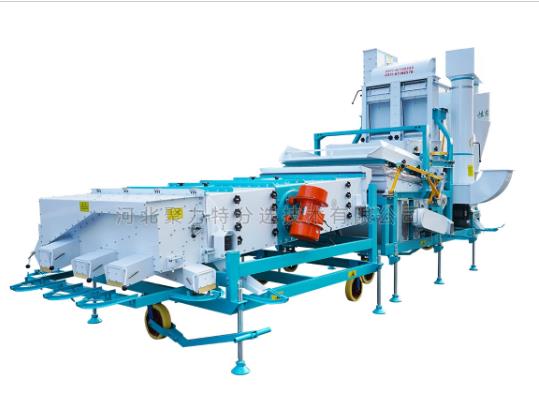
Peanuts may enter a facility as unshelled peanuts, while some processing plants work directly with peanut kernels. The presence of shells, soil and plant residues can change the cleaning process considerably.
For example, harvested peanuts may contain:
Soil and small clods
Stones
Stems and leaves
Dust and lightweight materials
Broken peanut material
Shell fragments
Undersized or irregular material
Other crop residues
The cleaning objective is therefore not simply to remove dust. It is to prepare the peanut material for the next operation while reducing unwanted foreign matter.
This is why a peanut cleaning machine manufacturer normally needs to understand the raw material before recommending a complete equipment configuration.
Rather than assigning every cleaning task to one machine, commercial systems can combine several separation methods.
The first stage normally focuses on removing the larger and lighter foreign materials that enter with harvested peanuts.
An air-screen cleaner can use screens and airflow to separate materials according to size and aerodynamic characteristics.
This makes it suitable for preliminary cleaning before more specific separation processes.
Stones and soil particles can be significantly heavier than peanut material.
A destoner machine is designed to separate heavy foreign materials from agricultural products based on differences in density and movement characteristics.
For peanut processors dealing with field soil and stones, destoning can be an important part of the cleaning system.
Not all unwanted material can be identified simply by size.
A gravity separator can separate materials with different specific gravities. Depending on the condition of the peanut material, this can help remove lighter or lower-density material from the main product stream.
The actual suitability depends on the physical characteristics of the peanuts and the separation target.
Peanuts can vary in size, and uniformity may be important for downstream processing.
A vibration grader can classify material into different size ranges by using different screen openings.
Grading can be incorporated when the processor needs more consistent peanut sizes for subsequent processing or packaging.
Mechanical cleaning does not identify every visual difference.
A peanut color sorter uses optical detection to identify selected color differences and automatically separate targeted material from the main product stream.
This can provide an additional sorting stage when the final product requires the removal of visually different or defective peanuts.
There is no single cleaning sequence that applies to every peanut processing facility.
A basic operation may look like:
Raw Peanuts → Pre-Cleaning → Stone Removal → Grading → Further Processing
A more demanding system can add density separation or optical sorting:
Raw Peanuts → Pre-Cleaning → Destoning → Gravity Separation → Grading → Color Sorting
The final configuration should be based on the incoming material and the required output rather than adding every available machine.
This is an important consideration when purchasing peanut cleaning equipment. More equipment does not automatically mean a more suitable processing line.
One of the first questions for equipment selection is whether the processing plant handles whole peanuts with shells or cleaned peanut kernels.
Freshly harvested or stored peanuts may arrive with soil, stones, stems, leaves and other field residues.
The cleaning process needs to deal with these materials without unnecessarily damaging the peanuts.
The initial focus is usually on removing large foreign materials, lightweight residues and heavy contaminants before the peanuts move to shelling or another processing stage.
Once peanuts have been shelled, the material characteristics change.
The cleaning system may focus more on separating shell fragments, broken kernels, undersized material, foreign particles and visually different peanuts.
Depending on the final application, grading and optical sorting can become more relevant at this stage.
Instead of starting with a machine model, peanut processors can begin with the material itself.
Consider these questions:
| Consideration | Why It Matters |
|---|---|
| Unshelled or shelled | Determines the type of material entering the machine |
| Peanut variety | Different varieties can have different physical characteristics |
| Moisture condition | Can affect material flow and separation |
| Foreign material | Determines which separation methods are needed |
| Stone content | Helps determine whether destoning is required |
| Size distribution | Determines whether grading is useful |
| Visual defects | Indicates whether color sorting may be needed |
| Required capacity | Determines equipment size and line configuration |
| Final application | Influences the required cleaning and grading level |
This approach is more useful than selecting equipment solely according to a nominal capacity number.
Processing capacity is normally expressed as tons per hour, but capacity should not be considered separately from the material condition.
Two peanut processing facilities may both require the same nominal throughput while having very different cleaning requirements.
For example, one facility may receive relatively clean material and require basic pre-cleaning, while another may receive peanuts containing substantial soil, stones and plant residues.
In the second case, additional separation stages may be required to maintain the desired processing flow.
When requesting a quotation from a peanut cleaning machine supplier, it is therefore useful to provide both the required capacity and information about the raw material.
The intended destination of the peanuts also affects the cleaning requirements.
For peanut oil production, cleaning is part of raw material preparation before subsequent processing.
The system can focus on removing foreign materials that should not enter the downstream oil-processing equipment.
Food-oriented peanut processing may require additional grading or sorting depending on the finished product.
More uniform material can be useful for processes where peanut size or appearance affects production.
Peanuts may also be supplied to roasting, snack, confectionery or other processing operations.
In these applications, the cleaning system can be configured around the specific requirements of the next production stage rather than using one universal standard.
An individual peanut cleaning machine can be appropriate when a processing facility already has other equipment or only needs to solve one specific separation problem.
A complete cleaning line becomes more relevant when several different impurities need to be handled in sequence.
For example:
Screening can address size-related separation.
Air separation can remove lightweight materials.
Destoning can target stones and heavy contaminants.
Gravity separation can address density differences.
Grading can classify peanuts by size.
Color sorting can provide optical separation.
The benefit of combining these technologies is that each machine performs a defined task instead of forcing one machine to handle unrelated separation requirements.
A good equipment proposal starts with useful production information.
Before contacting a peanut cleaning equipment manufacturer, prepare the following details where possible:
Type of peanuts
Unshelled peanuts or peanut kernels
Required capacity in tons per hour
Current impurity types
Approximate percentage of foreign materials
Presence of stones or soil
Desired size grading
Required color sorting
Existing processing equipment
Downstream processing stage
Available workshop space
Local electrical conditions
If a sample of the raw material is available, additional testing can also help determine the most suitable separation method.
For a commercial peanut processing project, buying an individual machine is only one part of the equipment decision. The relationship between the different cleaning stages can be equally important.
Hebei Julite Sorting Technology Co., Ltd. focuses on grain and seed cleaning and sorting equipment, including air-screen cleaners, gravity separators, destoners, grading equipment and color sorters.
For customers searching for a peanut cleaning machine manufacturer in China, the equipment configuration can be developed around the characteristics of the raw peanuts, required throughput and downstream processing requirements.
This approach allows the cleaning system to be used as part of a broader peanut processing project rather than treating the cleaning machine as an isolated piece of equipment.
The two terms are often used interchangeably in searches, but they represent different purchasing needs.
A peanut cleaning machine generally refers to an individual piece of equipment designed for a particular separation function.
A peanut cleaning line refers to multiple machines arranged in a defined processing sequence.
For example, a processor that already owns a grading system may only need a destoner.
A new processing plant, on the other hand, may require several stages from initial cleaning through grading and optical sorting.
Understanding this difference can help buyers communicate their actual requirements more clearly when contacting a peanut cleaning machine supplier.
A peanut cleaning machine is used to remove unwanted materials from raw peanuts, such as soil, stones, plant residues, dust and other foreign matter.
The suitable equipment depends on the specific machine and the characteristics of the raw material. Unshelled peanuts and peanut kernels should be evaluated separately when designing a processing system.
Not every project requires a destoner. It becomes more relevant when the incoming peanuts contain stones, soil particles or other heavy contaminants.
Yes. A color sorter can be incorporated when optical identification and removal of selected visually different material is required.
Start with the required tons-per-hour throughput, then consider the condition of the raw peanuts, impurity level and complete processing sequence.
Julite provides grain and seed cleaning and sorting equipment that can be combined into processing systems according to the customer's raw material and production requirements.
A commercial peanut cleaning machine should be selected according to the characteristics of the peanuts and the processing objective, rather than simply choosing a machine based on its advertised capacity.
Unshelled peanuts may require effective removal of soil, stones and field residues, while peanut kernels may require more attention to grading, foreign material separation and visual sorting.
Depending on the project, a peanut processing system can combine air-screen cleaning, destoning, gravity separation, grading and color sorting into different configurations.
Hebei Julite Sorting Technology Co., Ltd. supplies peanut cleaning equipment and seed processing solutions in China, helping processors select individual machines or combined systems according to capacity, raw material condition and downstream requirements.
Peanut Cleaning Machine, Peanut Cleaning Equipment, Peanut Cleaner, Peanut Cleaning Line, Peanut Processing Equipment, Peanut Seed Cleaner, Peanut Sorting Machine, Peanut Grading Machine, Peanut Destoner, Peanut Color Sorter, Peanut Cleaning Machine Manufacturer, Peanut Cleaning Machine Supplier, Peanut Cleaning Equipment Manufacturer, Peanut Processing Equipment Manufacturer, Peanut Cleaning Machine China
Processing demand survey
x